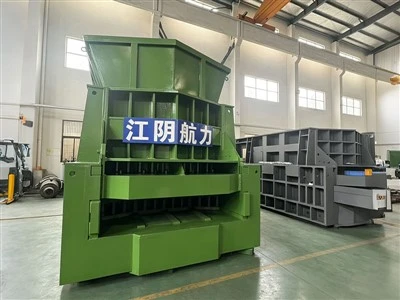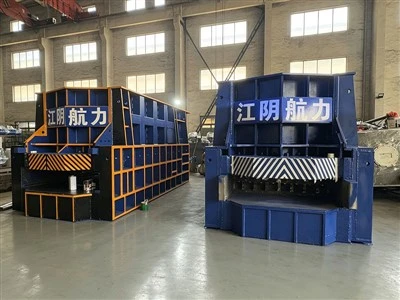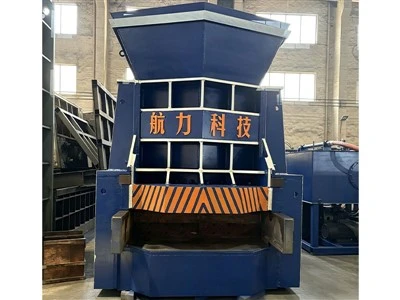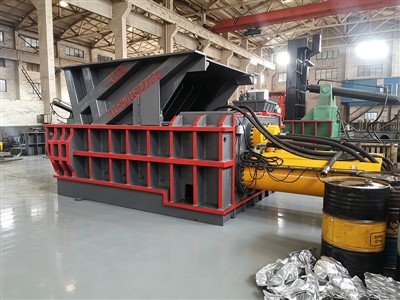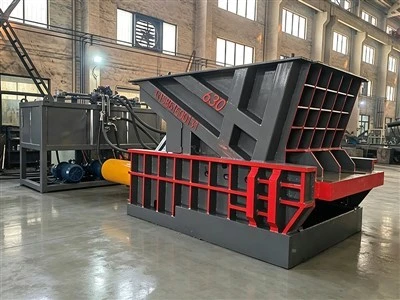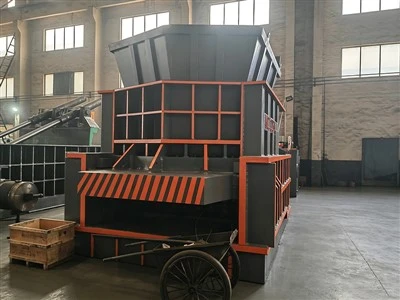

A typical metal baler structure comprises a conveyor belt, a conveyor motor, a pressing mechanism for baling the metal, and a material handling mechanism for feeding and discharging the baled metal. The pressing mechanism generally includes a hydraulically driven press box, an oil tank, a hydraulic pump, hydraulic lines, hydraulic cylinders, hydraulic push rods, and a pressure plate; the material handling mechanism includes an inlet, a storage hopper, a discharge outlet, a retrieval port, and a tipping assembly for dumping the material.
Material to be baled is placed into the baler's hopper; the hydraulic cylinders then operate to compress and shape the material into various types of metal bales.
The complete baling cycle consists of stages such as compression, return stroke, box lifting, box rotation, upward bale discharge, downward bale discharge, and bale receiving.
Modern metal balers feature automated control capabilities; for instance, integrating an automatic loading conveyor via a pit-mounted design enables full automation from conveying and compression to final shaping, while high-temperature and low-oil-level alarm systems can also be incorporated.